Others find out the hard way.
Free · for every applicant · built around the job they want
156 Marine Corps jobs, each with the scores it needs.
Nine ASVAB-style subtests · up to 3 hours on the clock · can be split
Every lesson on it moves a line score their MOS needs.

Unlimited drills that get harder. No calculator, like the real test.
A full mock test, all nine subtests.
Short? The plan rebuilds around what's still short, and they go again.
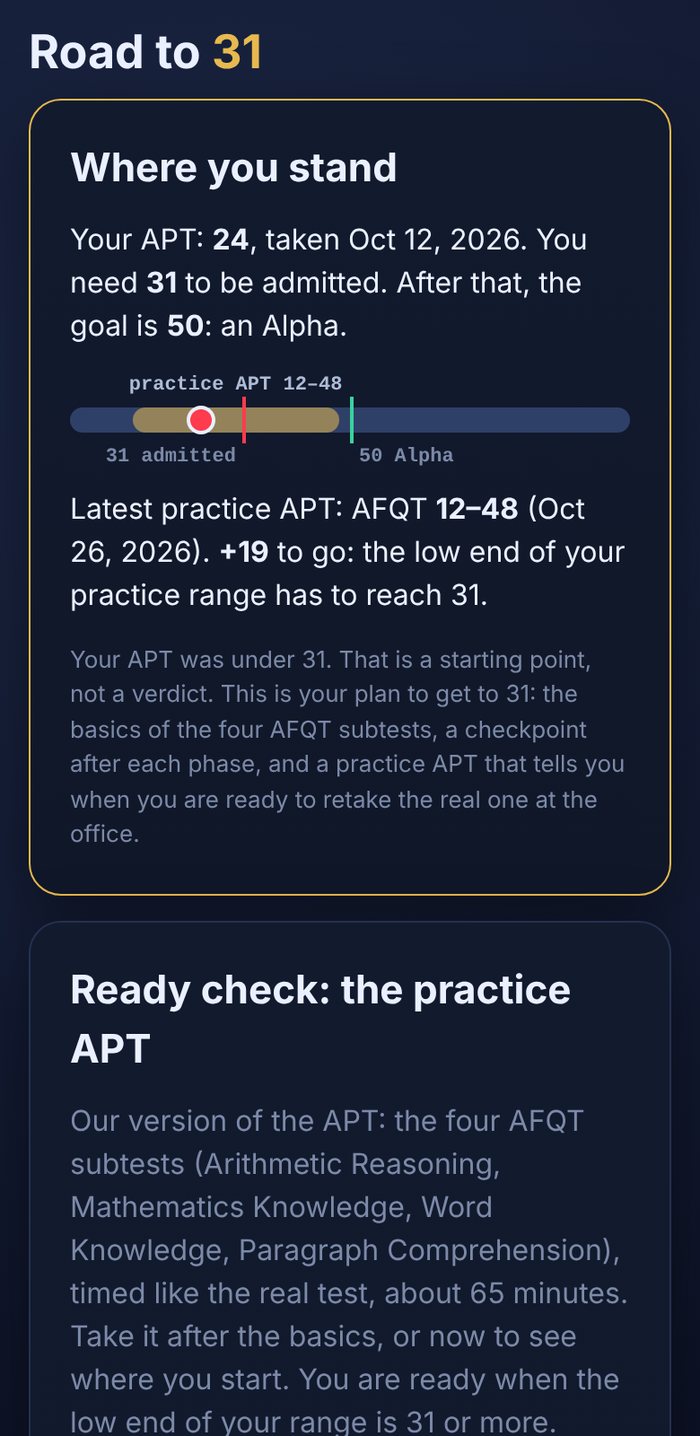
Under 31, the regular course locks. One mission: the Road to 31.
A new APT of 31 or more unlocks the full course.
"Is English your first language?"
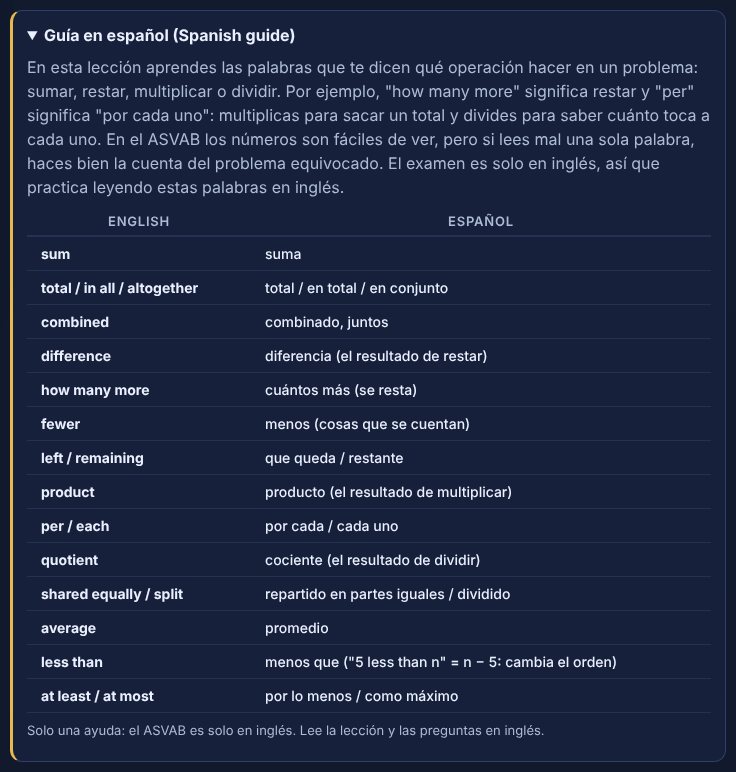
English for the ASVAB: 8 lessons, with a short Spanish glossary.
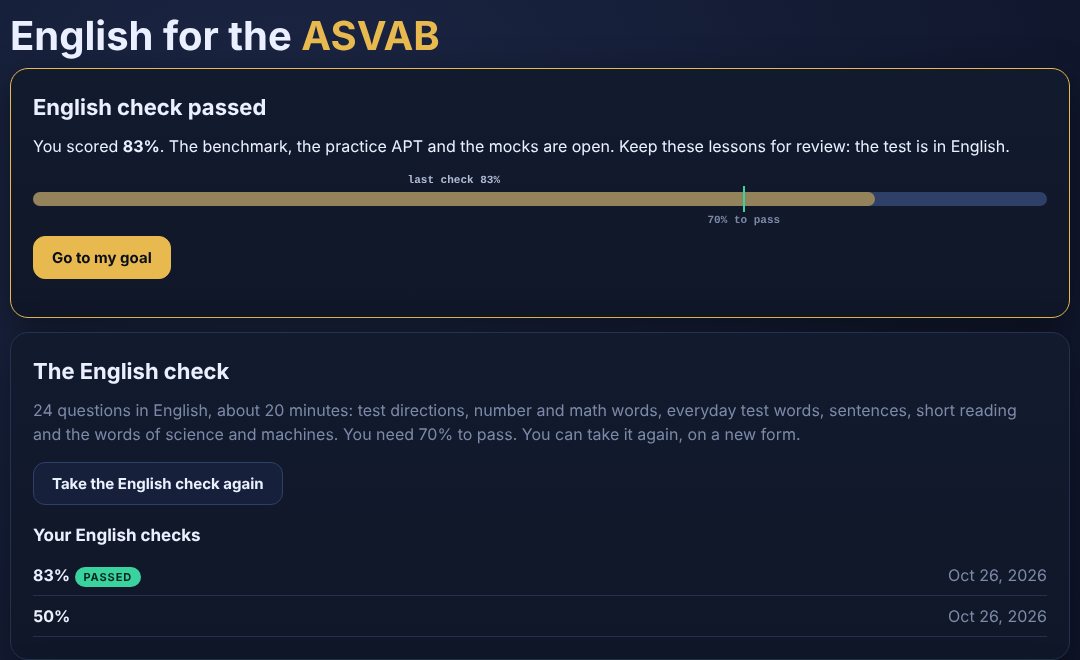
Pass the check, and the scored tests open.
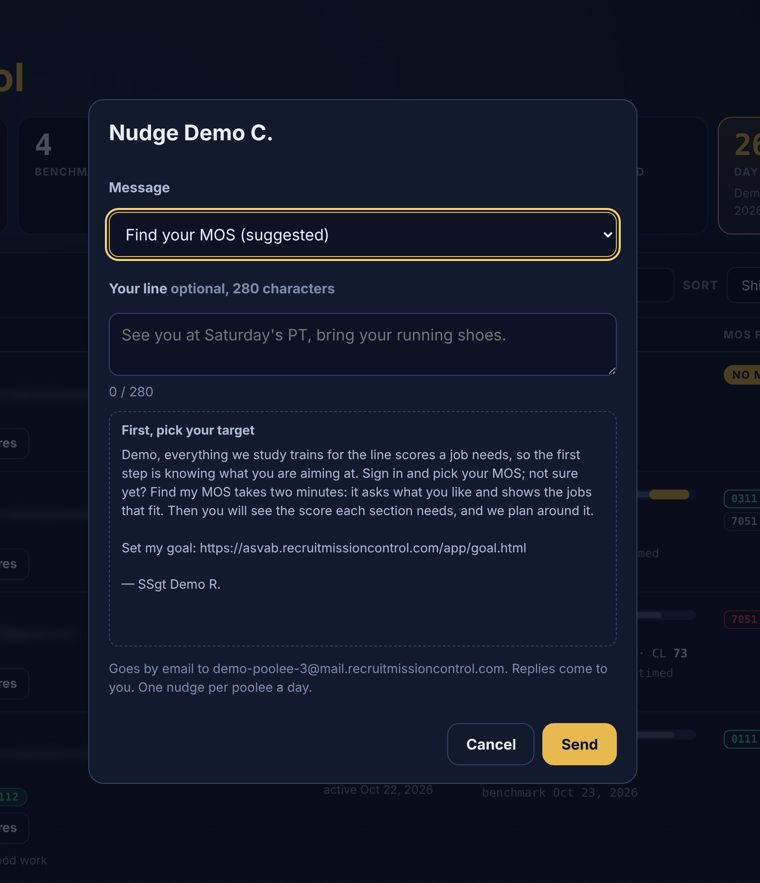
Encouragement in two taps.
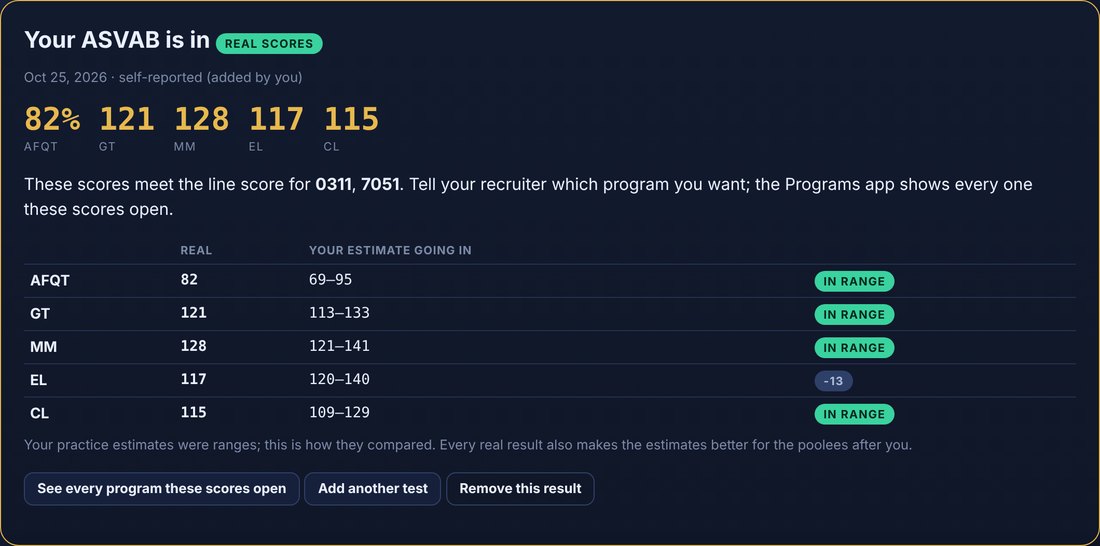
After MEPS, applicants add their real scores. That's how the estimates get checked.
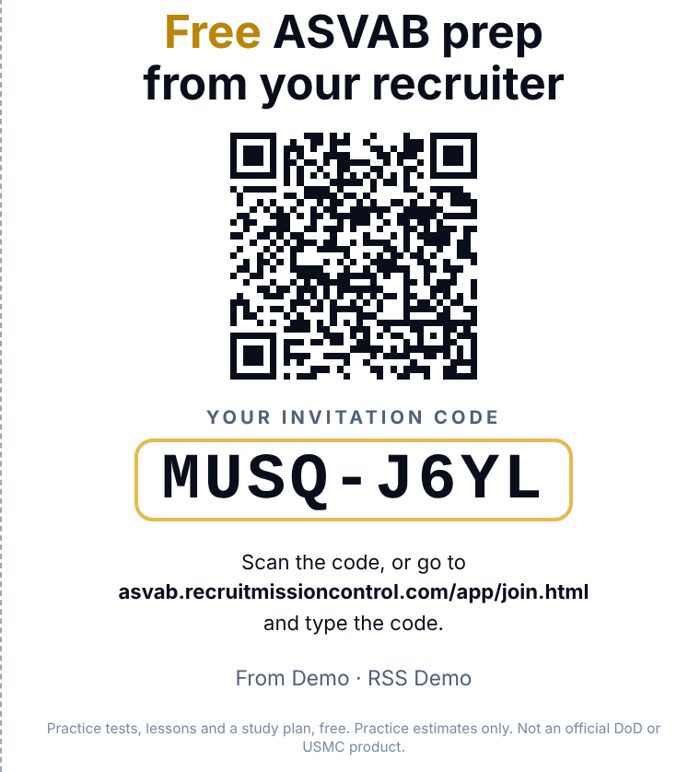
Free ASVAB prep for your applicants, built around the job they want, with a Road to 31 for those under 31 on the APT and an English path for English learners. Here’s the 3-minute brief.
Unofficial. Neither the United States Marine Corps nor any other component of the Department of Defense has approved, endorsed, or authorized this service. Who's behind this? ↗
Everything below is live today at asvab.recruitmissioncontrol.com. These are counts of what is built, not claims about results. Results come once real scores are in.
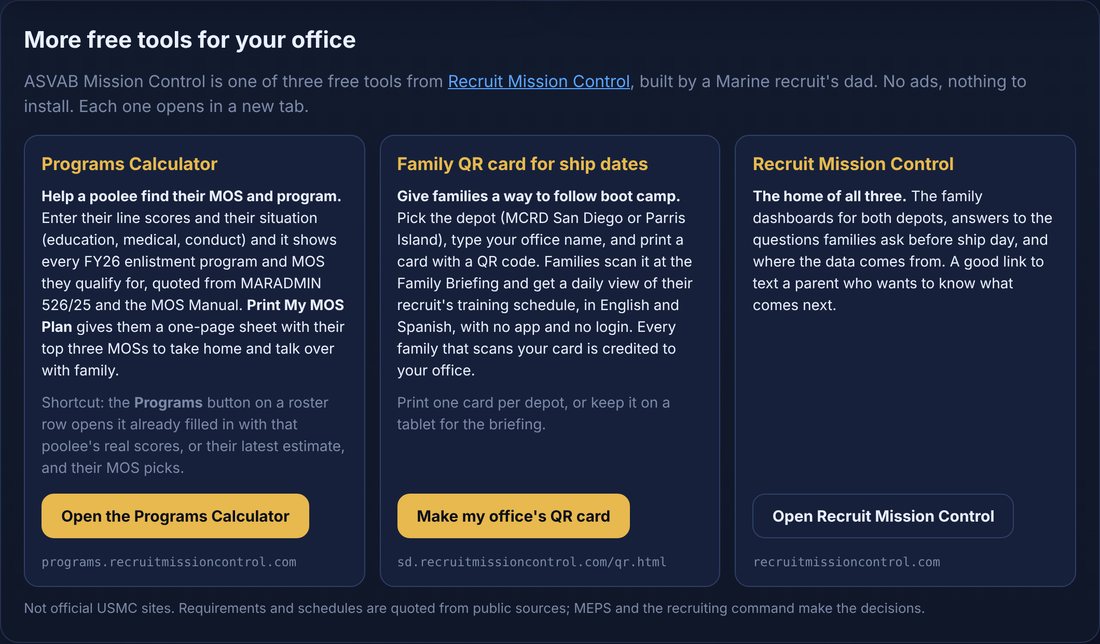
ASVAB Mission Control is one part of Recruit Mission Control: free tools built for recruiters and the families they serve, from the day an applicant walks into the RSS to the day their recruit ships, and through boot camp. One free recruiter login gives you the ASVAB course, MOS and program help with a printout for the family, and a QR card for ship-date briefings. All three are linked from your applicant board under "More free tools for your office."
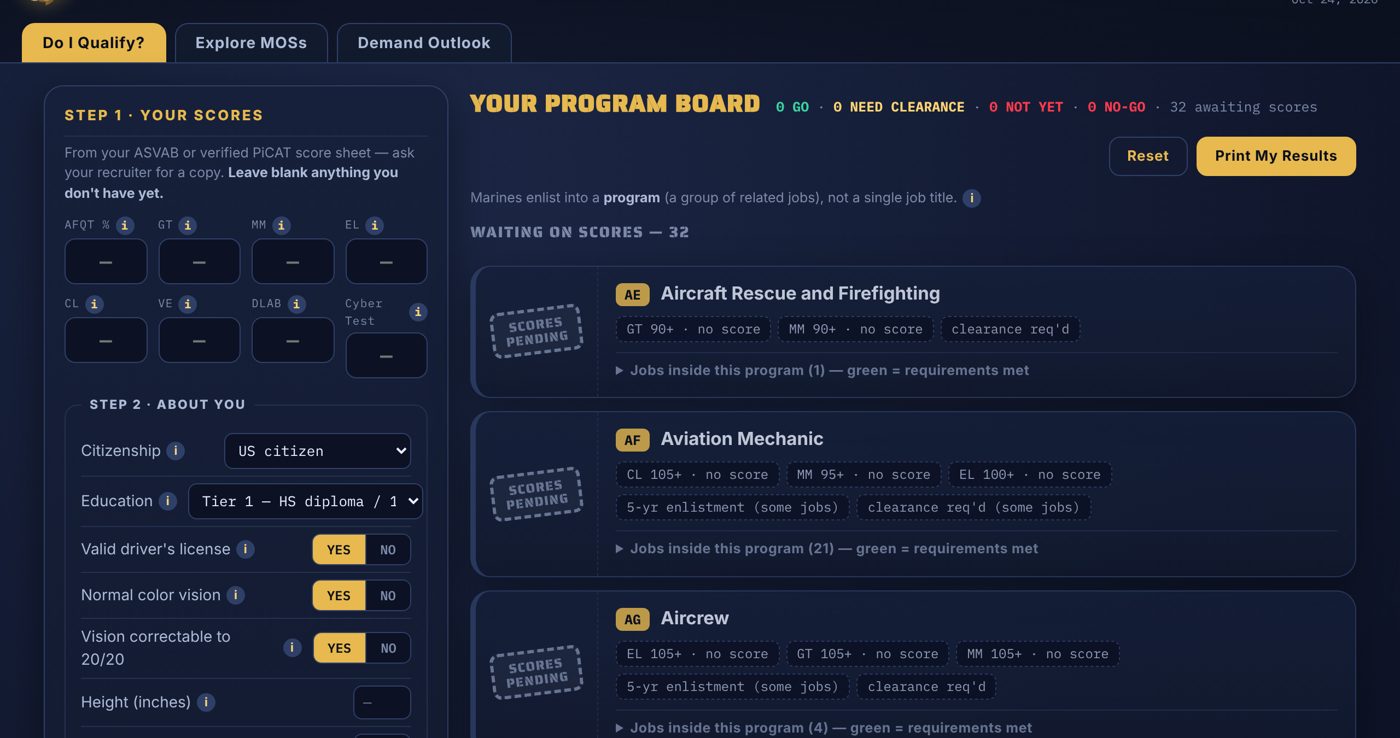
Help an applicant find their MOS and program. Enter their line scores and their situation (education, medical, conduct) and see every FY26 enlistment program and MOS they qualify for, what's still needed, and the demand outlook. Print My MOS Plan gives them a one-page sheet with their top three MOSs to take home and talk over with family.
Open the Programs Calculator →
The course in this brief. Applicants train to become an Alpha (AFQT 50+) and for the line scores their MOS picks need, and you watch progress on your applicant board. Under 31 on the APT? They start on the Road to 31. Practice results open the Programs Calculator prefilled, so you can talk programs with real numbers in front of you.
Apply as a recruiter →
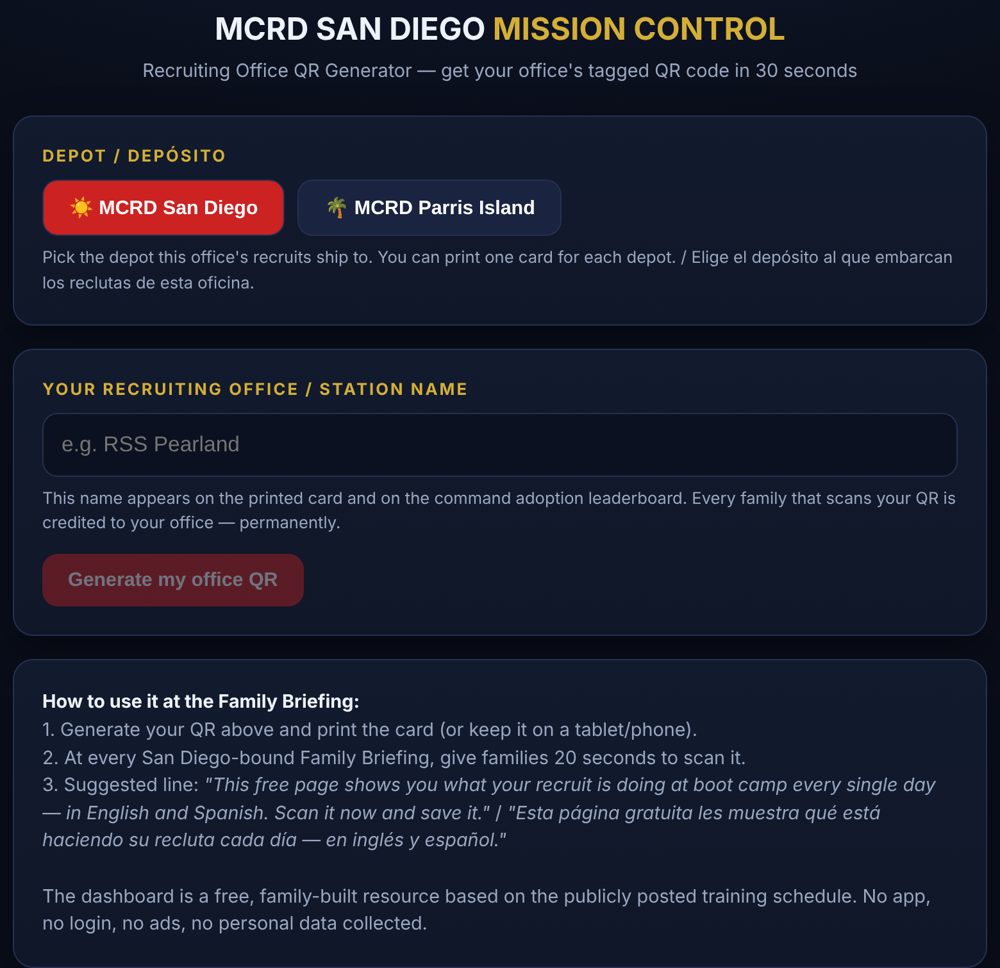
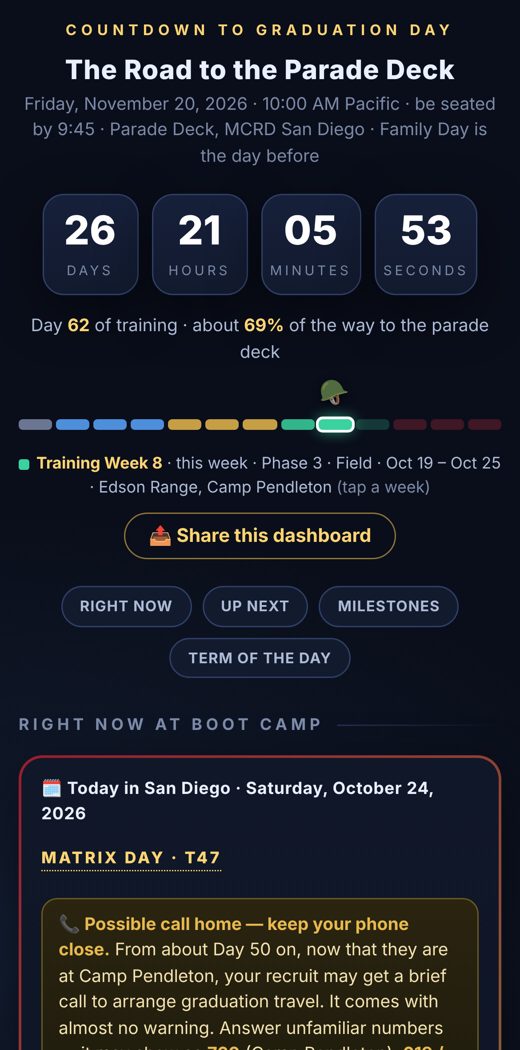
In 30 seconds, make your office's QR card for the Family Briefing: pick the depot (MCRD San Diego or Parris Island), type your office name, print. Families who scan it get a free dashboard of their recruit's boot camp: graduation countdown, the day-by-day training schedule and what's happening right now, in English and Spanish, for San Diego and Parris Island.


All three live at recruitmissioncontrol.com, with the family dashboards for both depots, the FAQ and the sources.
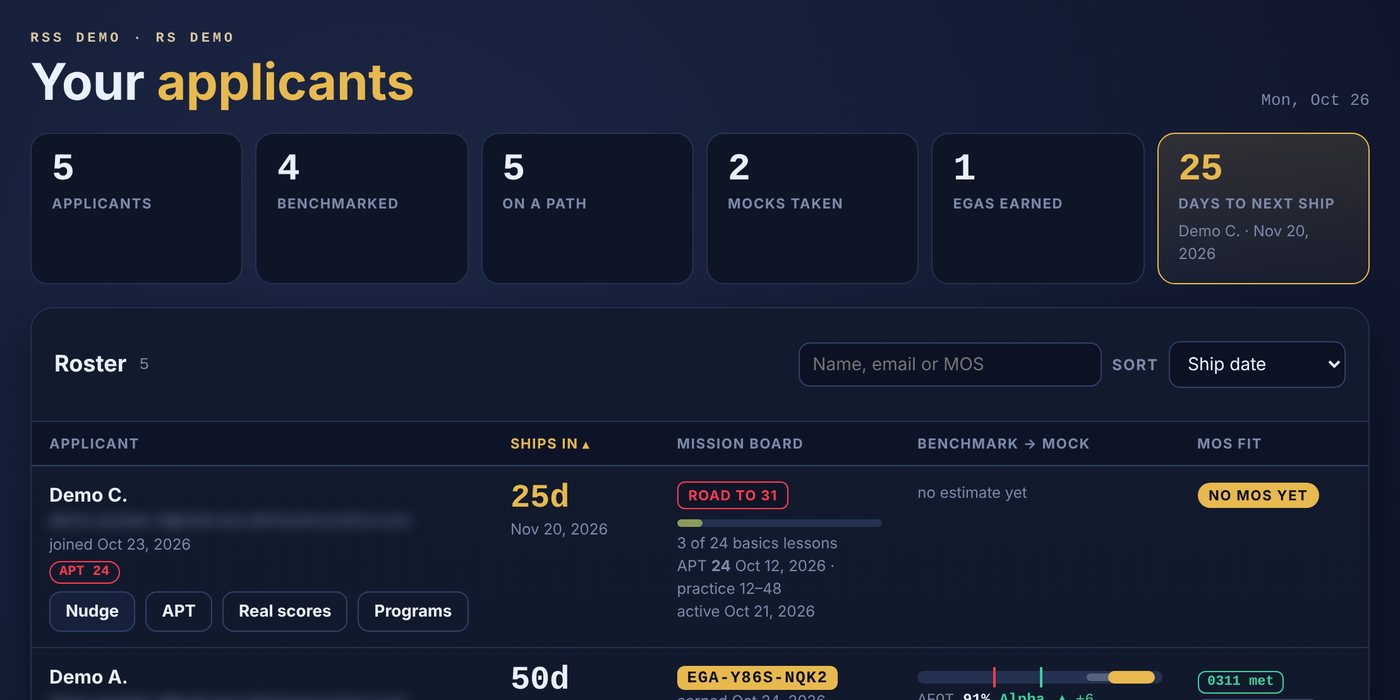
Click through. Real screenshots of the course, taken in a demo office with demo applicants.
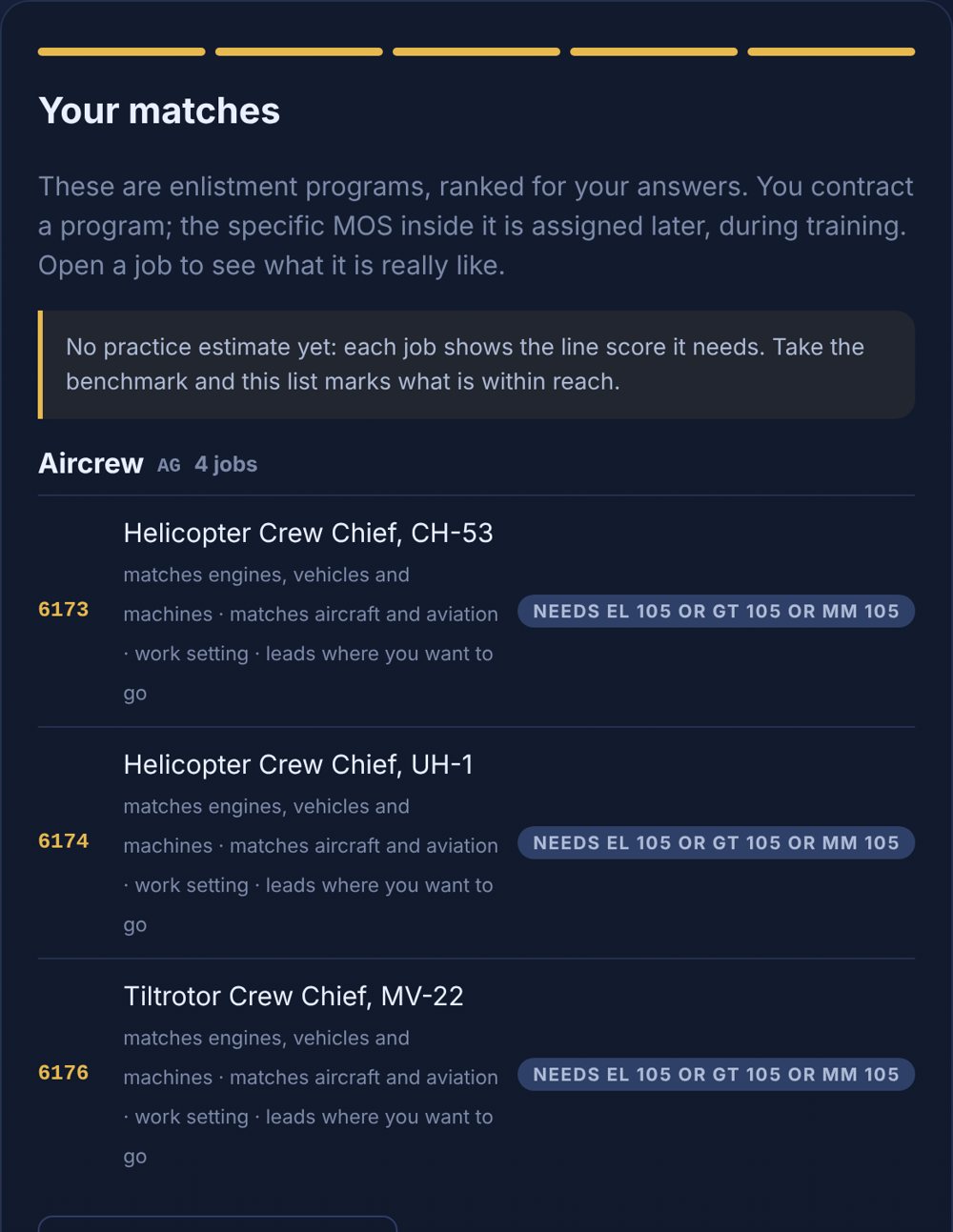
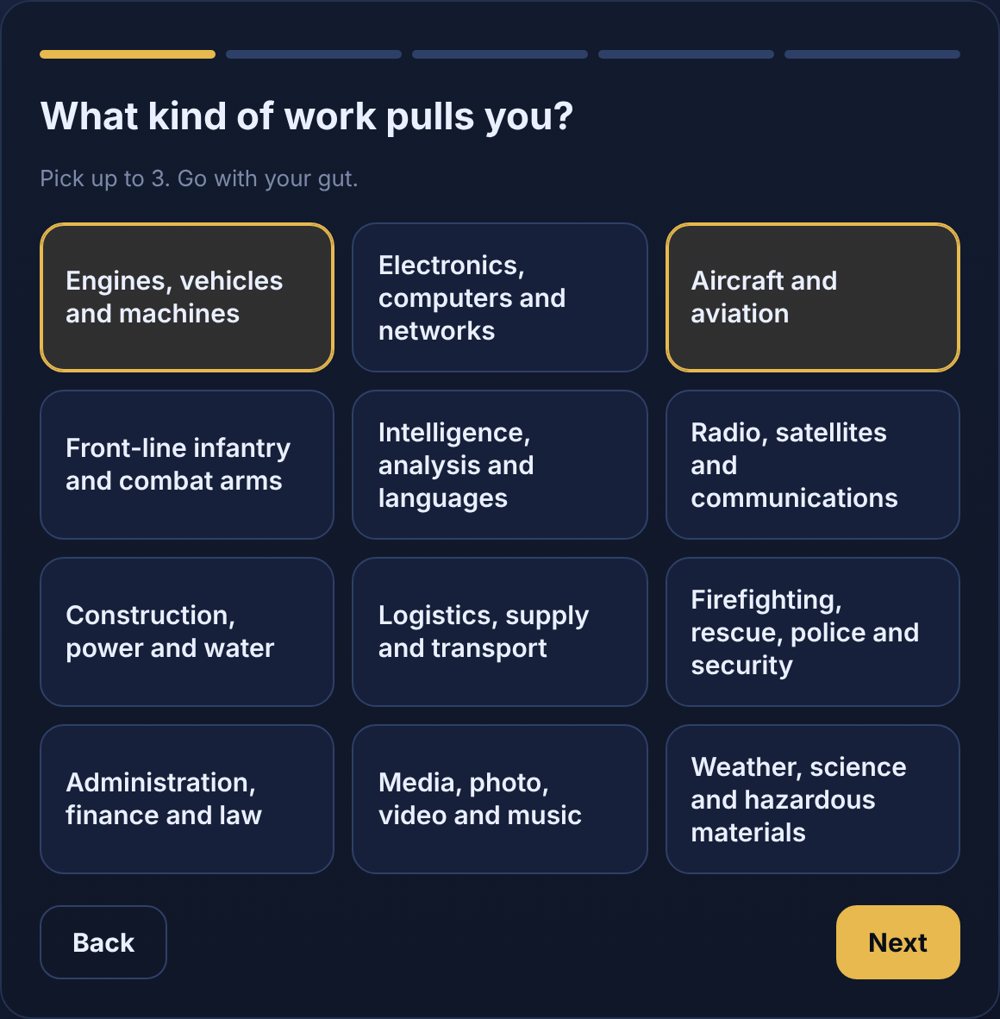
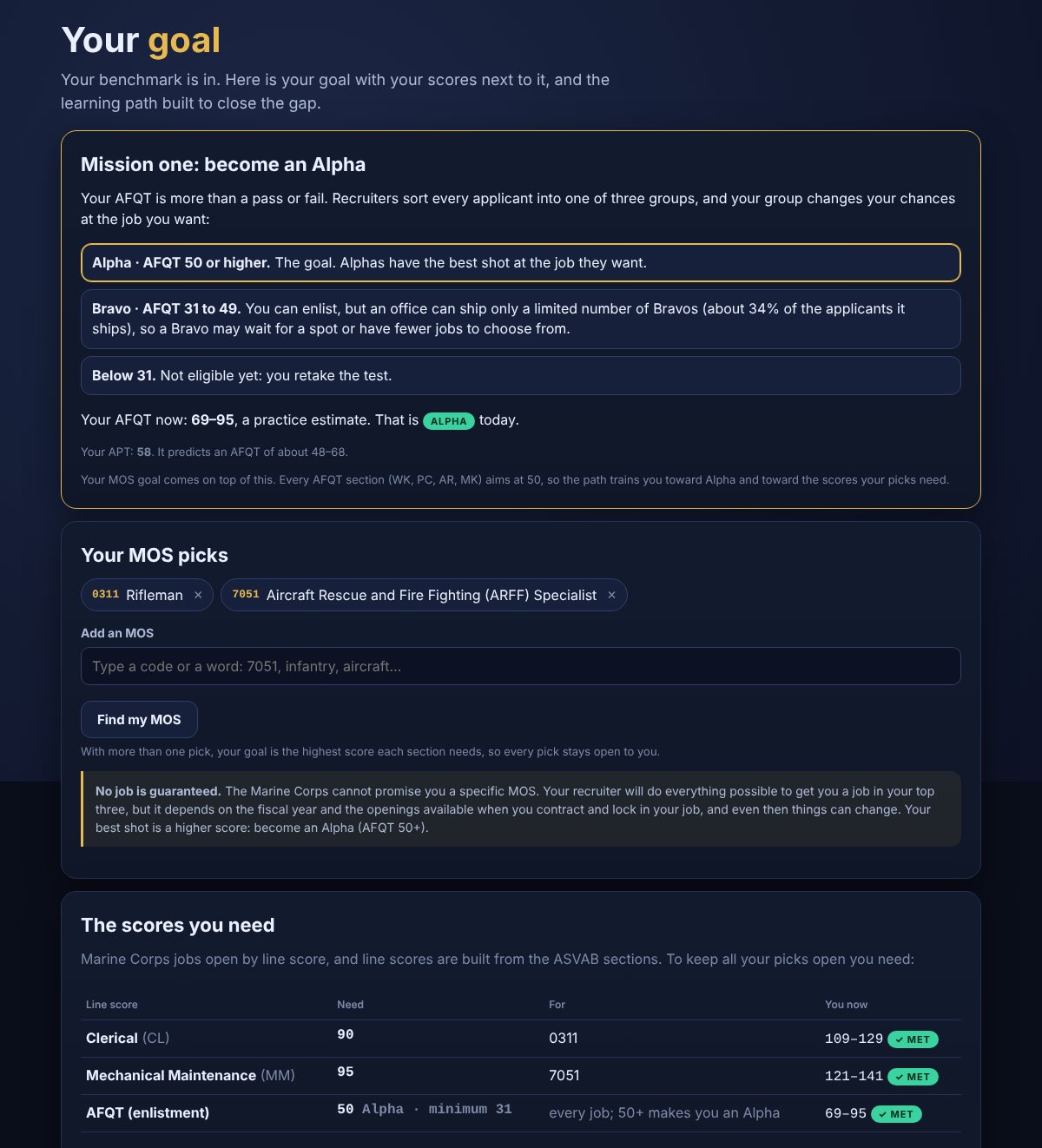
The applicant signs up with your invite code. The first question is their APT score: under 31, they start on the Road to 31English first. Then the goal screen opens with Mission one: become an Alpha (AFQT 50 or higher; a Bravo, 31 to 49, can enlist, but an office can ship only about 34% Bravos; under 31 is a retake). They pick up to five MOSs, or let Find my MOS suggest jobs from a few honest questions. Before they test, the screen shows the line scores their picks need together, the Alpha target, a target for each ASVAB section, and the three sections to ace first. It also tells them plainly: no job is guaranteed. You work to get them a job in their top three, but it depends on the fiscal year and the openings when they contract.


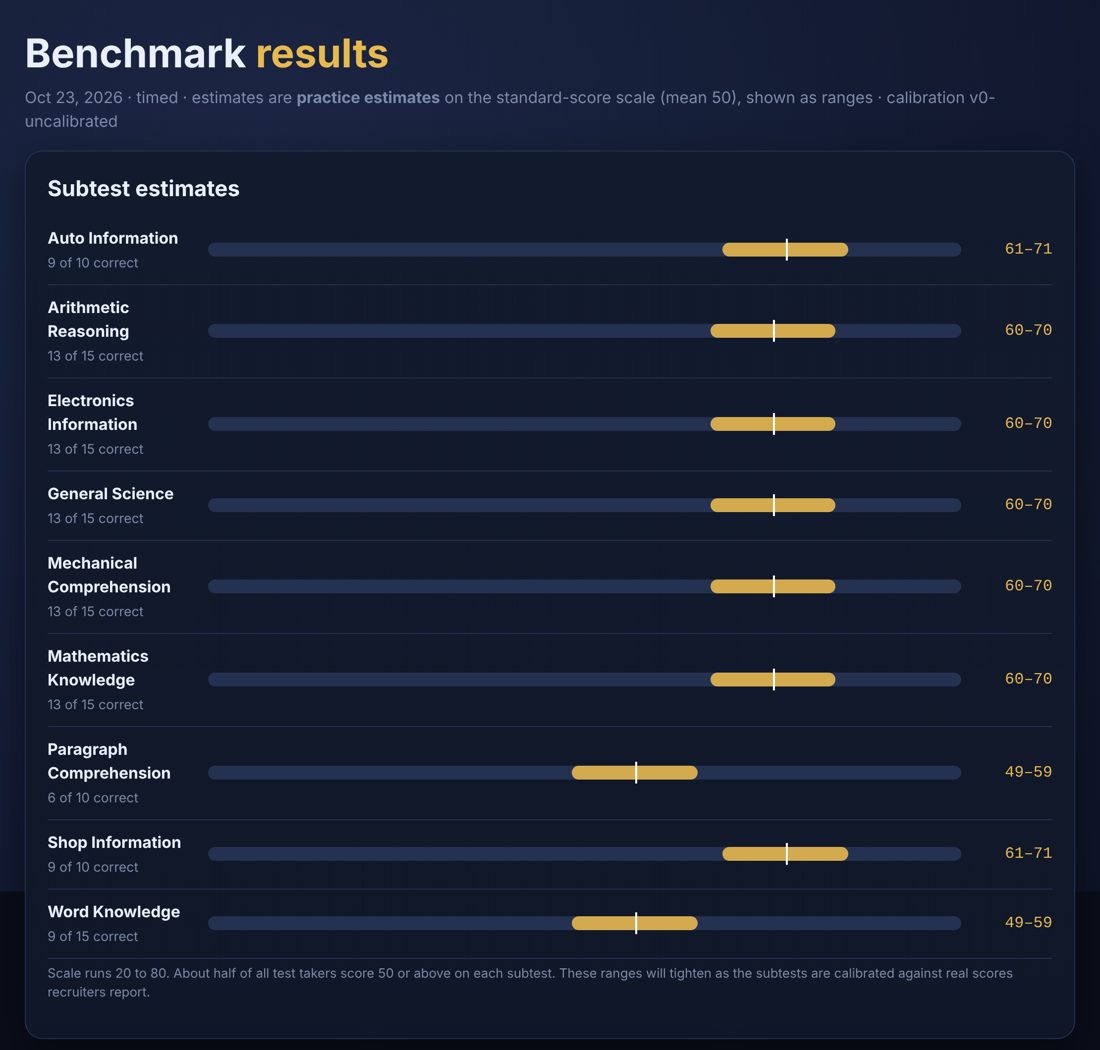
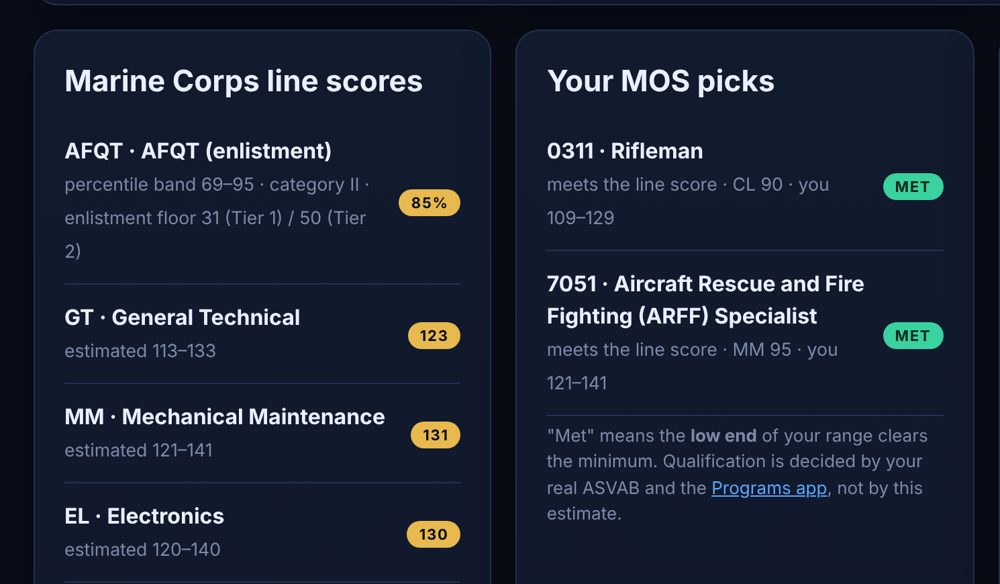
Nine ASVAB-style subtests, up to three hours on the clock (179 timed minutes), and it can be split across sittings. It gives a starting estimate of every Marine Corps line score, shown as a range, and the goal screen then shows those scores against every target their picks need.
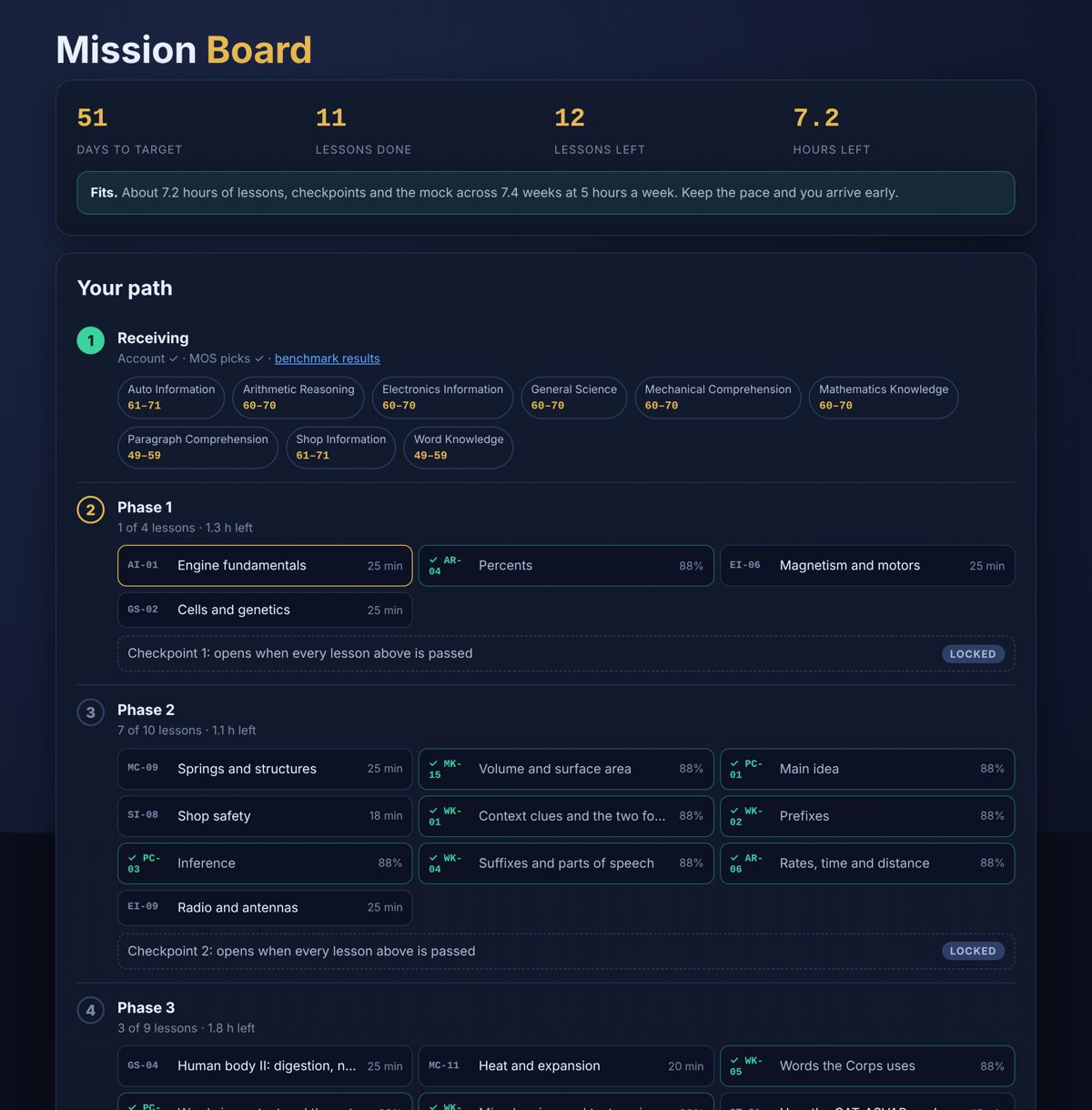
Once the picks and the benchmark are in, the Mission Board becomes home. The plan is built from their gaps, their MOS picks and their test date, with milestones named after recruit training: Receiving, three phases, the Crucible, the EGA. It re-plans after the benchmark and after a short mock.


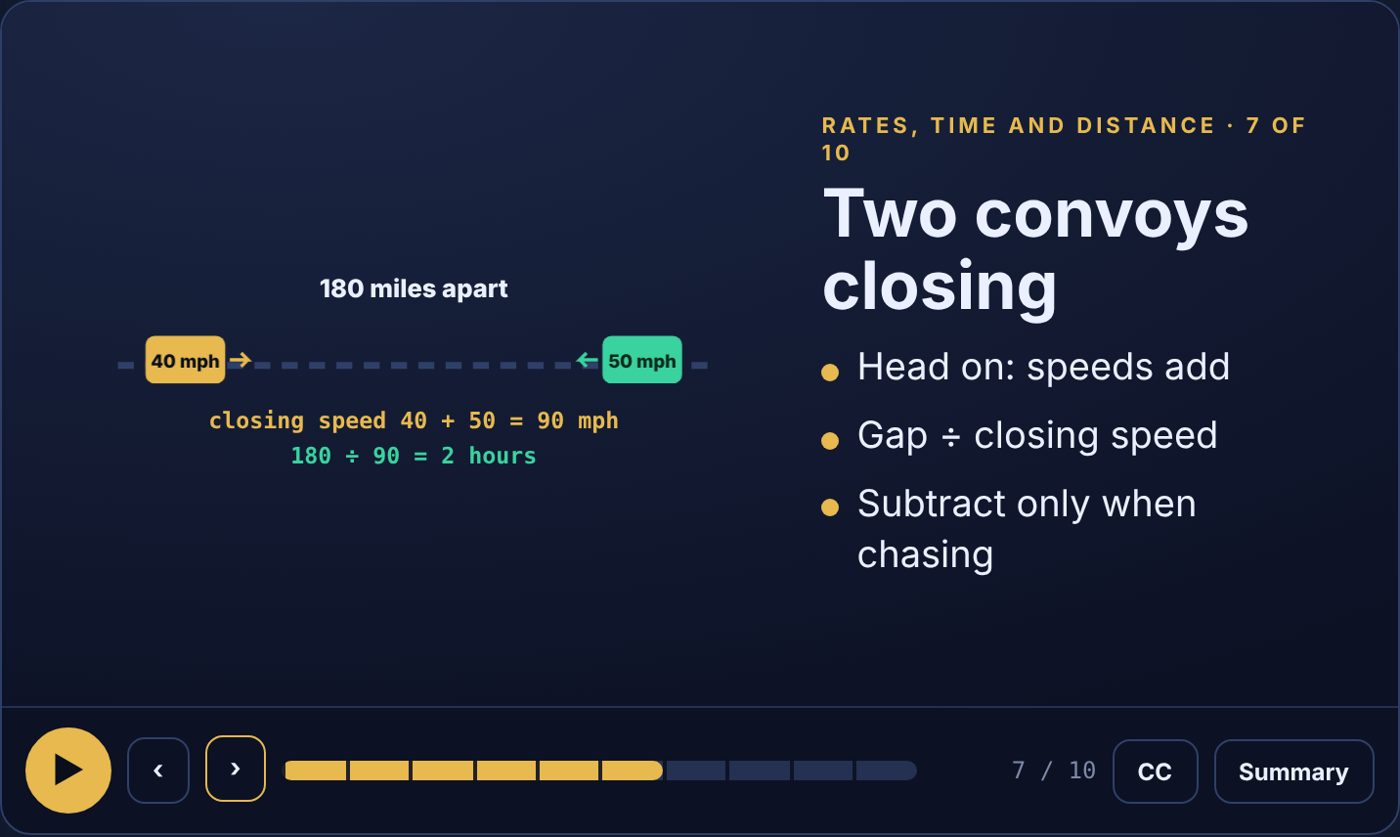
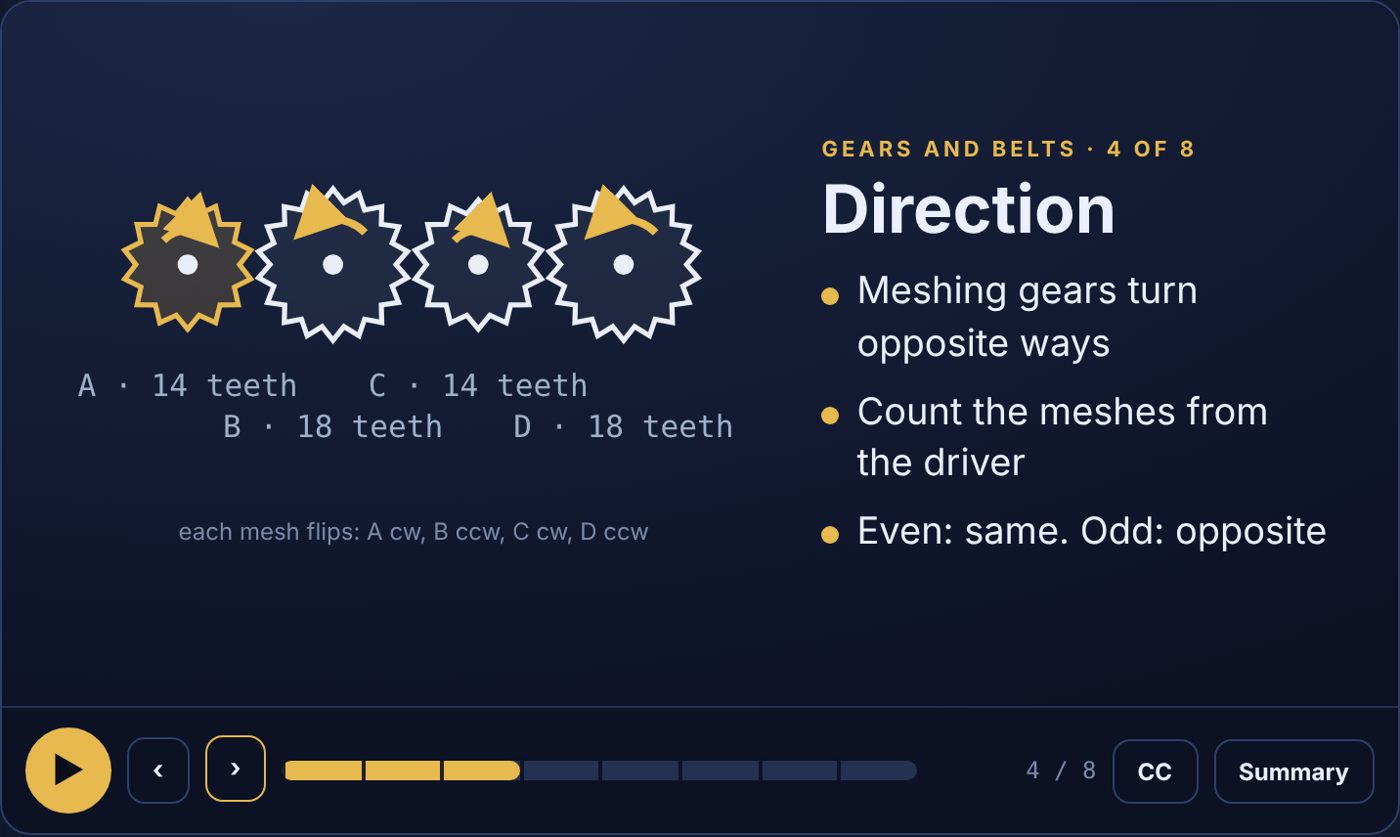
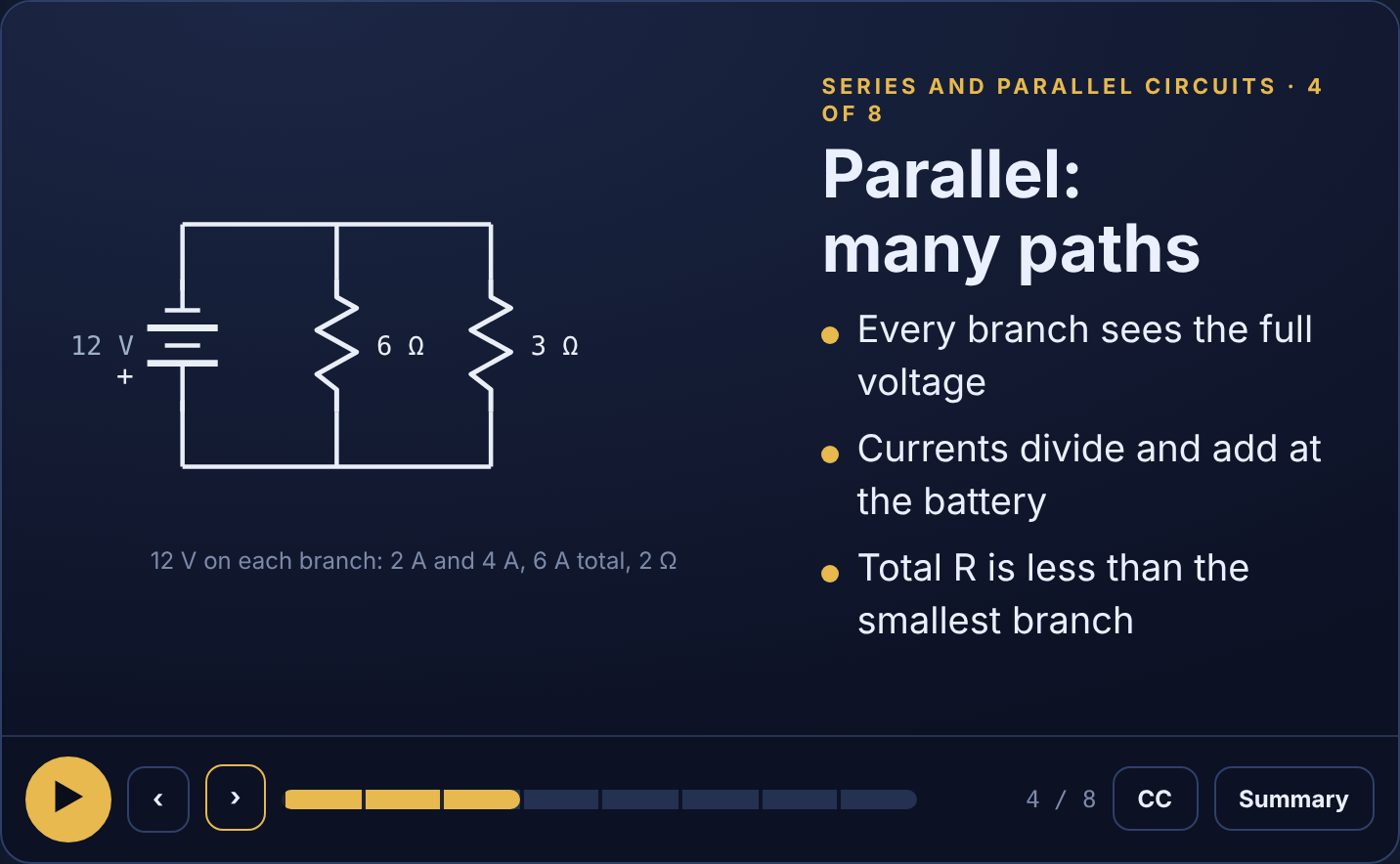
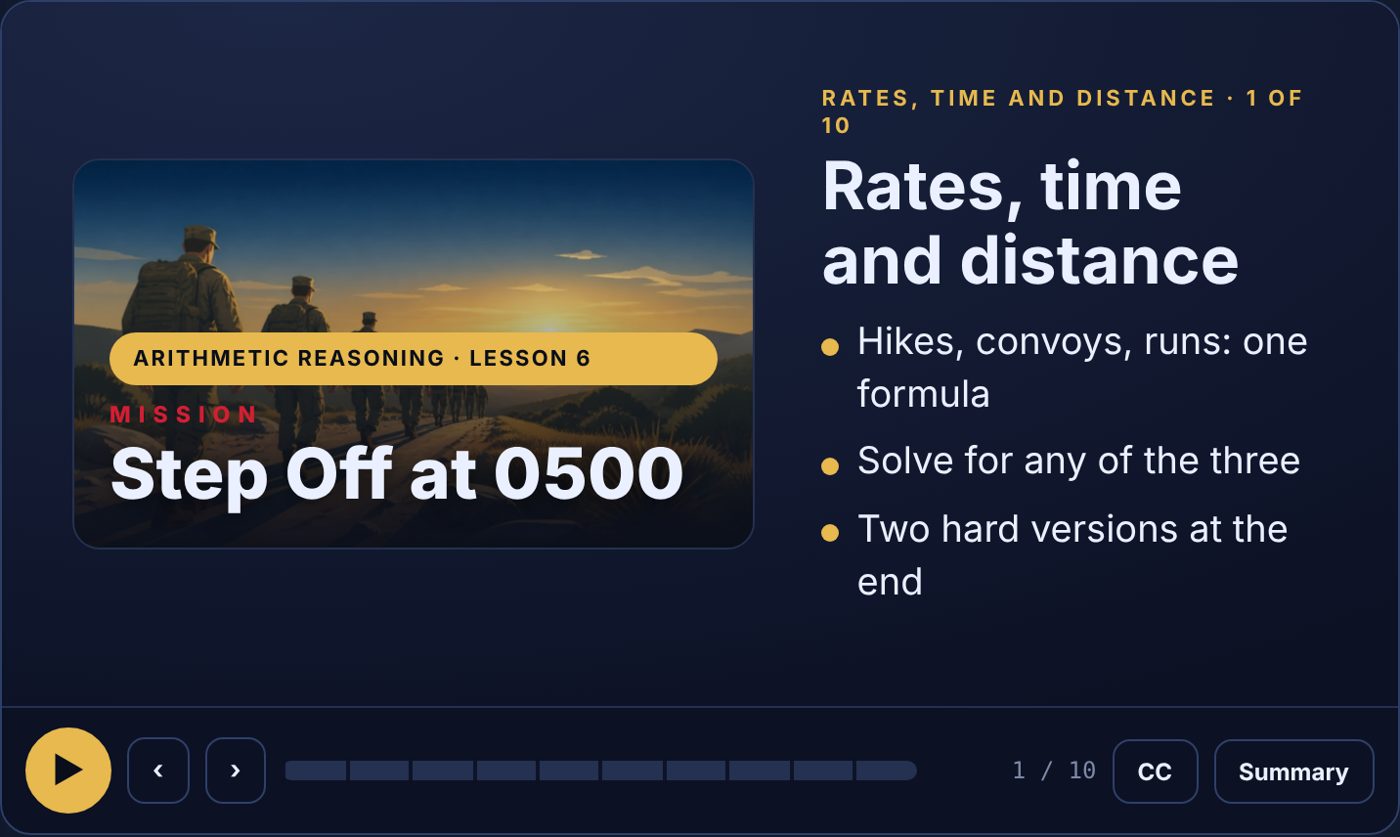
Each lesson plays like a short video: a narrated deck with captions, the exact figure drawn for the numbers in the problem, and a written summary to review. Click through some real slides.
Unlimited drills (difficulty rises as they go, no calculator) and an eight-question check per lesson, 80% to pass. Math and mechanical questions are generated fresh, with the figure drawn for the exact numbers, and every lesson has at least 25 distinct questions.


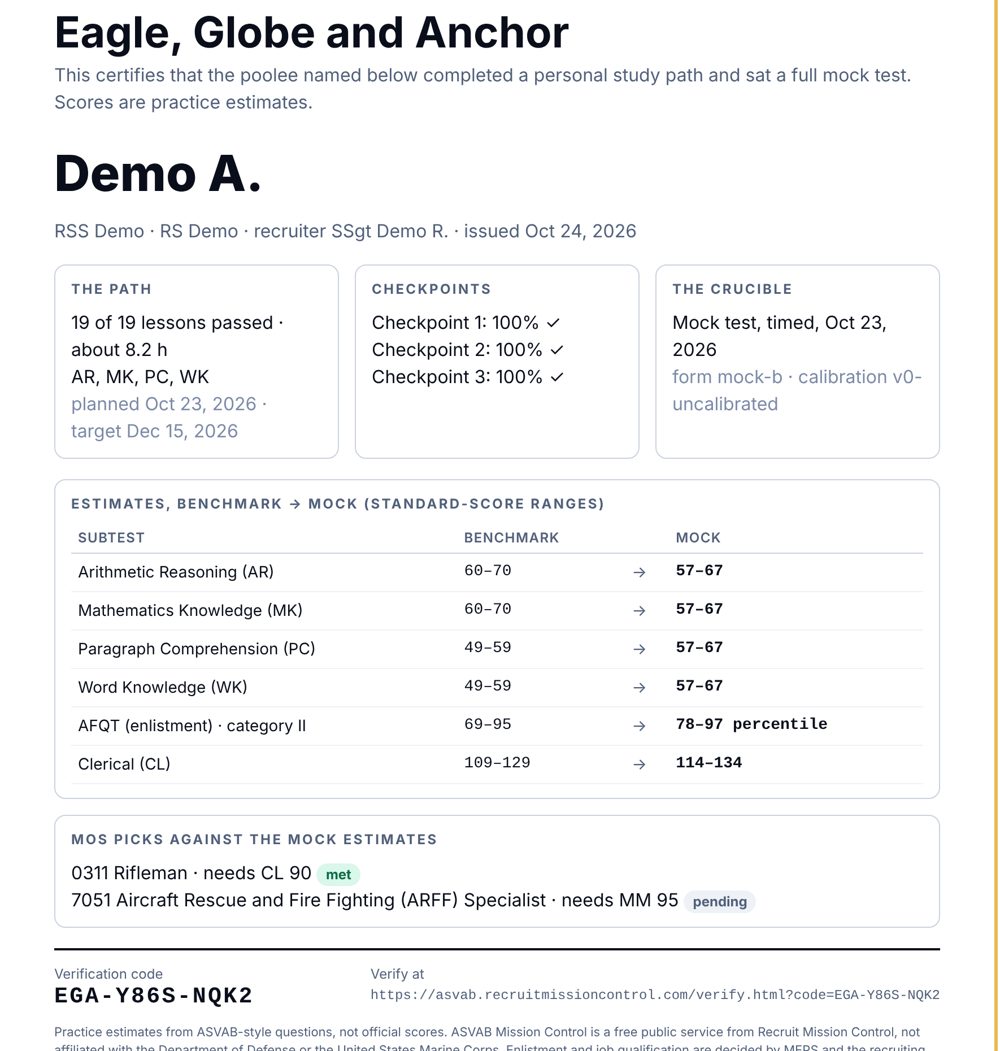
Three checkpoints along the way, then a full mock test. When the latest mock reaches the line scores their first MOS pick needs, they earn an EGA certificate to show you, with a code anyone can verify. If not, the plan rebuilds around what is still short and they take another mock.


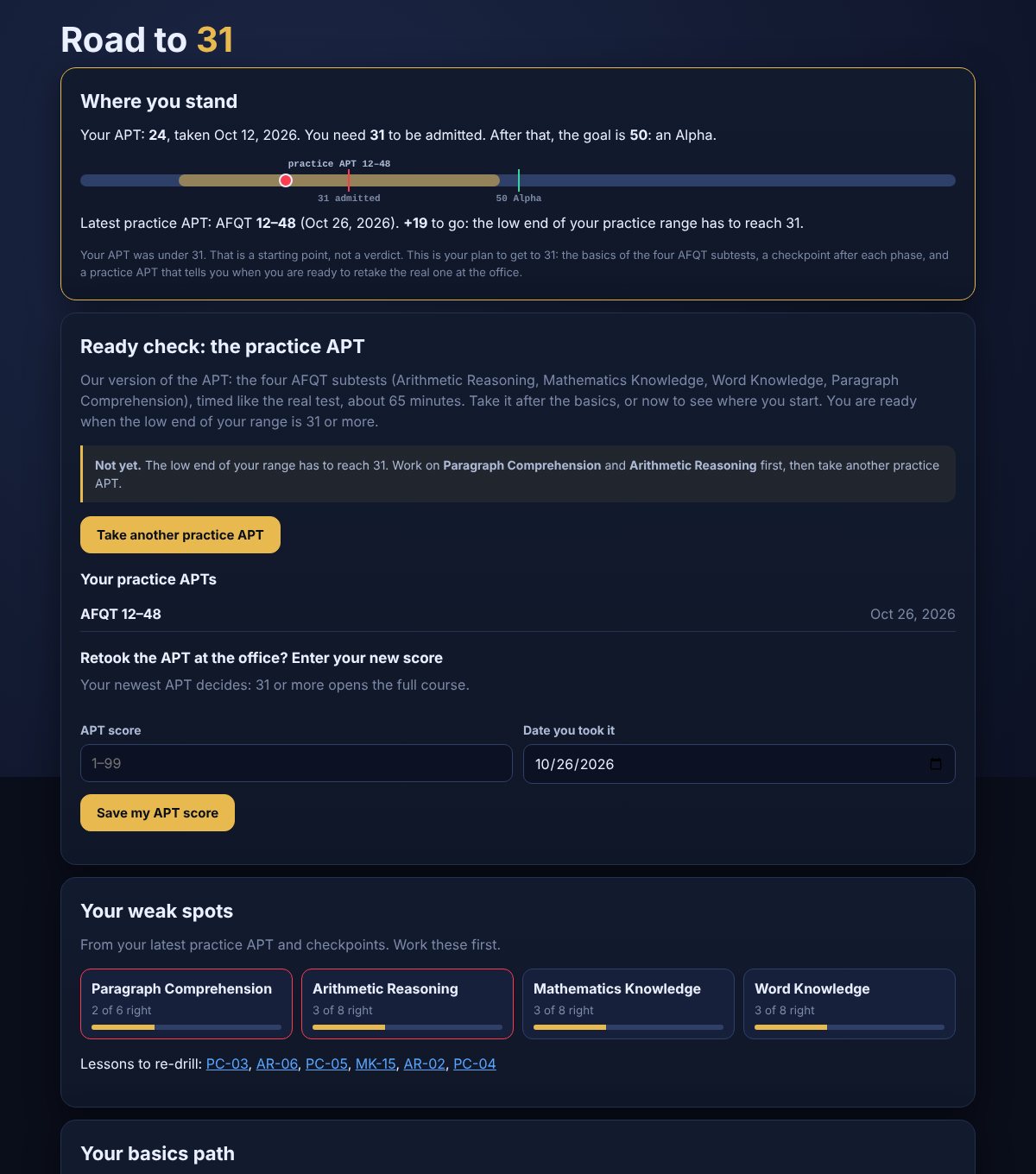
At the first visit, the office gives the APT, the short test that predicts the AFQT within about 10 points. Under 31, an applicant used to leave with advice and nothing to study from, came back, retook it, and too often gave up. Now the first thing the course asks is their APT score. Under 31, it locks the regular course and gives them one job: get to 31.
24 short narrated lessons over the four AFQT subtests (Arithmetic Reasoning, Math Knowledge, Word Knowledge, Paragraph Comprehension), from whole numbers and context clues up to percents, equations and inference. Three phases, each closed by a timed checkpoint.
Thirty questions on the four AFQT subtests, timed like the real test, on three forms that take turns. Ready means the low end of their practice AFQT range is 31 or more. When it says ready, you get an email: send them in to retake the APT.
They retake the APT at your office and enter the new score (or you do, with the APT button on your board). 31 or more opens the full course: the benchmark, their MOS goal and the study path toward an Alpha. Still under 31? The Road to 31 stays, with everything they have done.


The Road to 31 (demo applicant, RSS Demo). The first question after joining is the APT score.
The ASVAB is only given in English. An applicant who knows the math but reads English slowly will score low, and nobody can tell why. So the course asks one more question at the start: is English your first language? If not, they take a short English check before any scored test.
The English the ASVAB is written in: test directions ("most nearly", "EXCEPT"), numbers in words, the math words that pick the operation ("per", "remaining", "how many more"), common test words, sentences, short reading, and science and machine words. 70% to pass, on three forms that take turns.
Eight lessons on exactly that English, with drills. Each one has a short Spanish glossary and guide: the only Spanish lesson content on the site. The benchmark, practice APT and mocks wait until the check is passed, so no score is lowered by English alone. Lessons and drills stay open.
An EN chip on the applicant's row: check due, the score, or passed. A nudge in two taps sends them to the English check.
Everything else, every lesson, drill and test, stays in English, like the real ASVAB. The Spanish switch changes the menus and instructions only.
These come straight from the course's drills. Original items in the ASVAB style; none of them is a real ASVAB question.
A platoon hikes at a steady 3 miles per hour for 1.5 hours. How far does it hike?
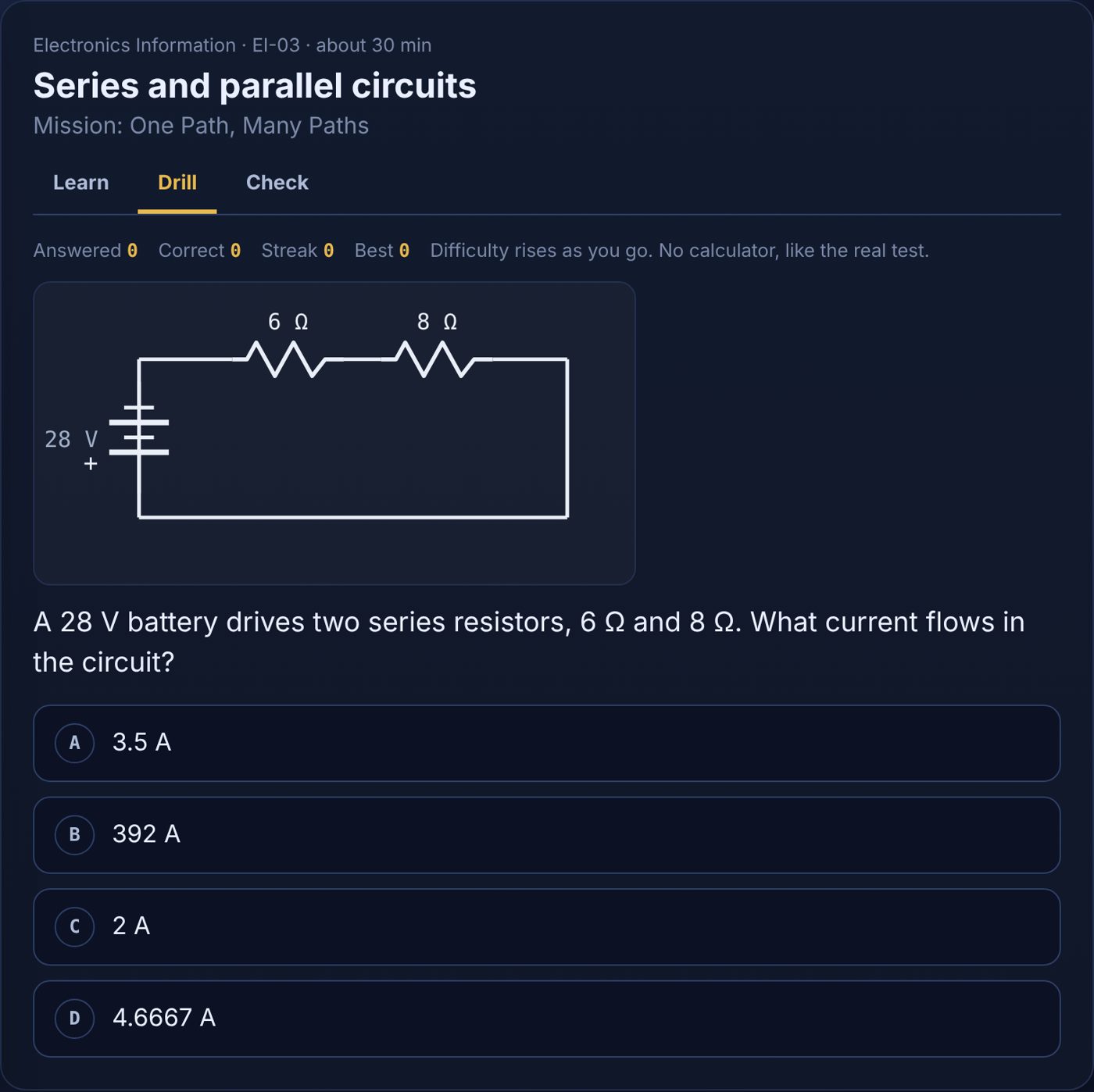
A 28 V battery drives two series resistors, 6 Ω and 8 Ω. What current flows in the circuit?
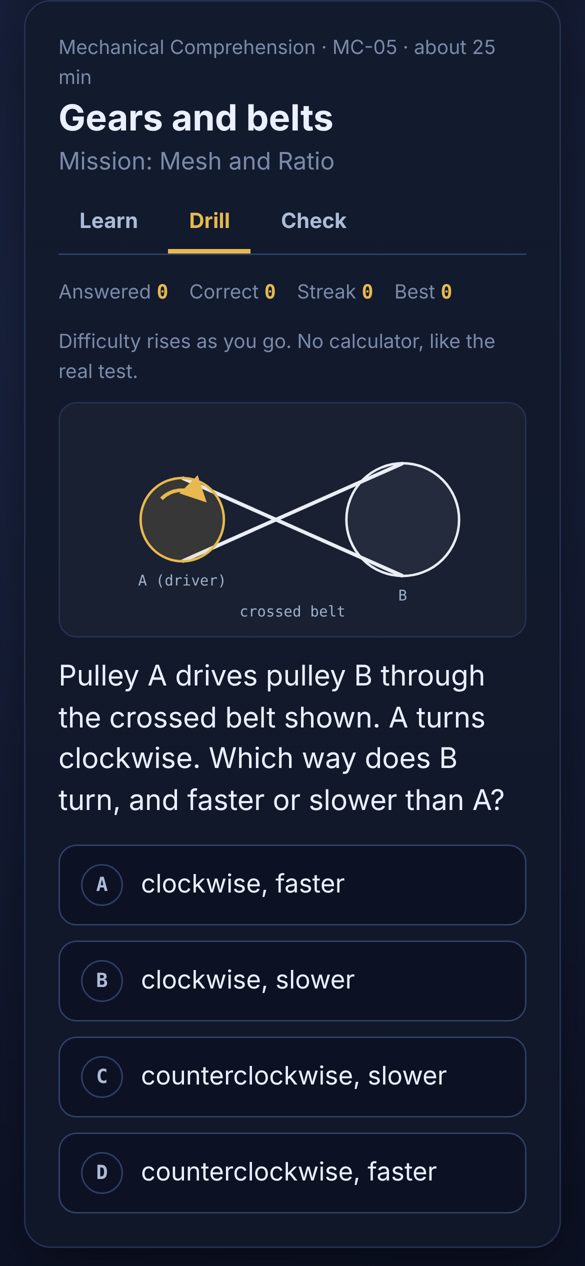
Pulley A drives pulley B through the crossed belt shown. A turns clockwise. Which way does B turn, and faster or slower than A?
The clerk will expedite the paperwork for an early ship date. Expedite most nearly means:
Each one opens with an original illustration and a mission name. Tap any tile to open that lesson on the live site.
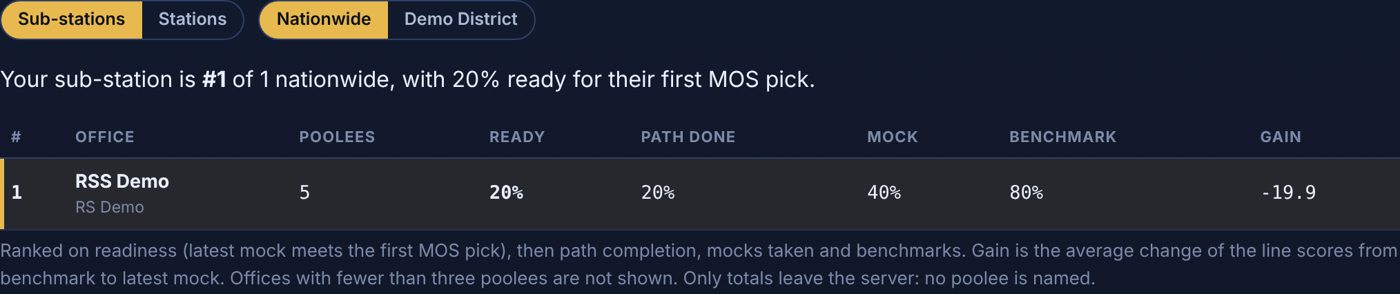
The recruiter side is built for a sub-station: enroll in minutes, see who is actually studying, and nudge the ones who aren't.
It costs nothing, and you can stop any time. Apply now, and your first applicant can take the benchmark tonight.